
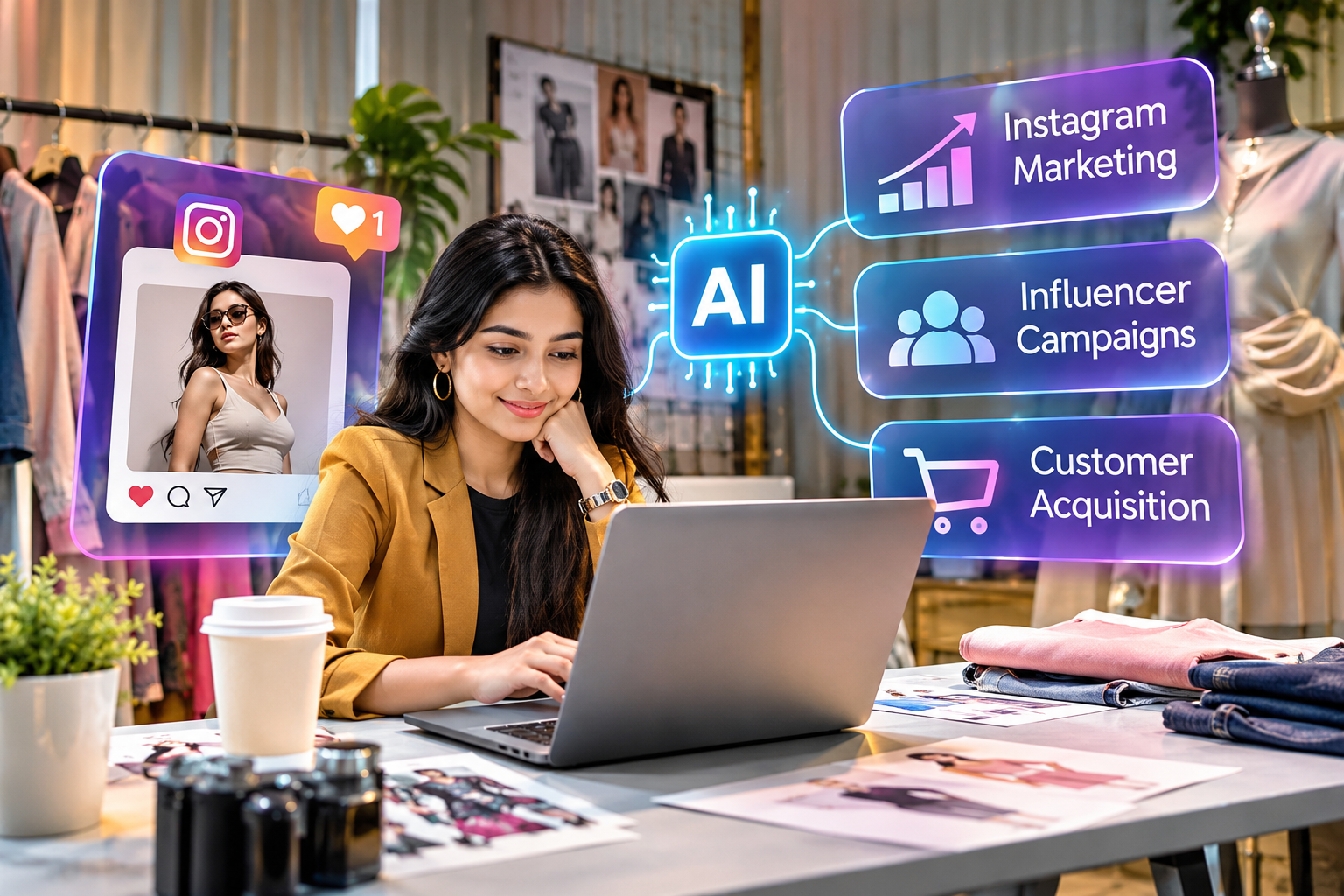
Artificial Intelligence (AI) is helping fashion brands improve their marketing activities. From generating content ideas and analysing audience behaviour to identifying suitable influencers and personalising customer communication, AI can support different stages of digital marketing.
AI for Fashion Marketing allows businesses to understand customer interests, improve campaign planning and make better use of marketing data. Instead of depending entirely on manual research, brands can use AI-powered systems to identify patterns and make more informed decisions.
Fashion businesses interested in developing digital marketing and AI skills can explore the learning opportunities available at Upskill Now.
In this blog, we will explore how fashion brands use AI for Instagram marketing, influencer campaigns and customer acquisition, along with practical examples and strategies.
1. How Fashion Brands Use AI for Instagram Marketing
Instagram is a visual platform where fashion brands showcase their products, share styling ideas and connect with customers. AI can help marketers plan and manage Instagram activities more efficiently.
AI-Powered Instagram Content Ideas
Fashion brands need regular and relevant content to maintain audience interest. AI can help marketers generate ideas for:
-
Instagram Reels and short videos
-
Fashion styling posts
-
Product launch announcements
-
Seasonal collection promotions
-
Instagram Stories
-
Educational fashion content
-
Product-focused captions
For example, a clothing brand launching a summer collection can use AI to generate content ideas around summer outfits, styling combinations and product features.
The marketing team can then select the most suitable ideas and create original content that matches the brand's identity.
AI for Instagram Captions and Hashtag Research
Writing captions for every Instagram post can take time. AI can help create caption drafts based on product details, campaign objectives and the intended audience.
It can also help organise relevant hashtag ideas based on the content category.
Fashion marketers should review AI-generated captions and hashtags before publishing. The final content should sound natural, communicate accurate product information and match the brand's tone.
Instagram Audience Analysis
Understanding the audience is important for successful Instagram marketing. AI-supported analytics can help marketers study available engagement and audience data.
Fashion brands can use these insights to understand:
-
Which posts receive more engagement
-
What type of content attracts attention
-
Which products generate audience interest
-
When followers are most active
-
Which campaigns encourage profile visits and enquiries
For example, if styling videos receive more engagement than static product images, a fashion brand can consider publishing more styling-focused Reels.
Personalised Instagram Campaigns
Different customers may have different fashion preferences. Some may be interested in casual clothing, while others prefer formal wear or seasonal collections.
AI can help brands organise customer preferences and create more relevant marketing messages. This can make Instagram campaigns more targeted and useful.
2. How AI Improves Influencer Marketing Campaigns
Influencer marketing allows fashion brands to showcase their products through creators who have established audiences. However, selecting suitable influencers and measuring campaign performance requires research and planning.
AI Influencer Marketing can support this process by helping brands analyse creator information, audience engagement and campaign results.
Finding Relevant Fashion Influencers
Choosing an influencer based only on follower count may not produce the best results. A creator's content style, audience interests and engagement are also important.
AI-supported analysis can help fashion brands compare potential influencers using available information, such as:
-
Content category
-
Audience interests
-
Engagement patterns
-
Content consistency
-
Previous campaign performance, where available
-
Relevance to the brand's target audience
For example, a brand selling everyday casual clothing may prefer creators who regularly publish outfit styling and lifestyle content rather than creators whose content focuses on unrelated subjects.
Brands should verify creator information and audience quality before finalising a partnership.
Planning Influencer Campaigns with AI
AI can help marketing teams organise influencer campaign activities, including:
-
Campaign objectives
-
Content themes
-
Product promotion ideas
-
Posting schedules
-
Campaign briefs
-
Performance measurement plans
For example, a fashion brand launching a new collection can plan a campaign in which selected creators publish styling videos, product demonstrations and outfit recommendations.
AI can help prepare initial campaign briefs, but the brand should review all instructions to ensure that creators communicate accurate product details.
Measuring Influencer Campaign Performance
Influencer campaigns should be evaluated using relevant performance indicators.
AI-powered analytics can help organise campaign data and identify patterns in:
-
Reach and impressions
-
Likes and comments
-
Shares and saves
-
Profile visits
-
Website visits
-
Enquiries and conversions
For example, if one creator generates more website visits than another, the brand can investigate the content format, audience relevance and campaign message to understand the difference.
AI supports analysis, but campaign decisions should consider the quality of engagement and actual business objectives rather than follower numbers alone.
3. How Fashion Brands Use AI for Customer Acquisition
Customer acquisition means attracting new potential customers and encouraging them to explore or purchase a brand's products.
AI can help fashion businesses understand customer interests, improve marketing communication and identify opportunities to reach new audiences.
Understanding Potential Customers
Fashion brands can use available customer and campaign data to identify patterns in shopping interests and behaviour.
For example, a clothing business may discover that certain customer groups show greater interest in casual wear, while others engage more with formal collections.
These insights can help marketers develop relevant campaigns for different audience segments.
AI-Powered Advertising and Audience Targeting
Fashion brands can use AI-supported advertising tools and platform features to analyse campaign performance and improve targeting decisions.
AI can assist with:
-
Comparing audience segments
-
Analysing advertising performance
-
Identifying content that attracts attention
-
Testing different advertising messages
-
Reviewing campaign results
-
Improving budget allocation decisions
For example, a fashion brand promoting a new collection can test different creative concepts and review which versions generate more relevant engagement or website visits.
Brands should monitor campaign results regularly and make adjustments based on actual performance.
Personalised Product Recommendations
Customers are more likely to explore products that match their interests.
AI can help fashion businesses use available browsing history, purchase information and stated preferences to organise relevant product recommendations.
For example, a customer interested in formal clothing may receive recommendations related to formal shirts, trousers or accessories, depending on the information and personalisation settings available to the business.
Personalisation should always respect customer privacy and applicable data protection requirements.
AI Chatbots for Customer Engagement
Customers often have questions about product sizes, colours, availability, delivery and return policies.
AI-powered chatbots can help answer common questions and guide visitors towards relevant product information.
Fashion brands can use chatbots to:
-
Answer frequently asked questions
-
Share product information
-
Guide customers through product categories
-
Provide basic order-related assistance
-
Collect enquiries for follow-up
Businesses should ensure that chatbot responses are accurate and provide access to human support when a question requires personal assistance.
4. Practical AI Marketing Strategies for Fashion Brands
Fashion brands can begin using AI through small, focused marketing activities. The following strategies can help businesses organise their efforts.
Strategy 1: Create a Consistent Instagram Content Plan
Use AI to generate a monthly content calendar based on product launches, seasonal collections and audience interests.
A simple content plan can include:
-
Product showcase posts
-
Styling tips
-
Behind-the-scenes content
-
Customer-focused posts
-
Influencer collaborations
-
Collection announcements
Review every idea before publishing to maintain a consistent brand identity.
Strategy 2: Use AI to Research Influencer Partnerships
Prepare a list of potential creators and compare their content relevance, audience engagement and campaign suitability.
Use AI-supported analysis to organise the available information, but verify the results before selecting an influencer.
Strategy 3: Test Different Marketing Messages
Create different versions of Instagram captions, advertising messages and product descriptions.
Test suitable variations and compare their performance. This can help the marketing team understand which messages connect better with the intended audience.
Strategy 4: Improve Customer Communication
Use AI to prepare responses to common customer questions and organise product information.
Make sure the responses are correct, easy to understand and consistent with the brand's policies.
Strategy 5: Analyse Campaign Results
Review Instagram engagement, website traffic, enquiries and conversions.
Use AI to organise the data, identify patterns and prepare campaign summaries. Apply the findings when planning future marketing activities.
5. Benefits of AI for Fashion Marketing
AI can support fashion businesses in several areas of digital marketing.
Saves Marketing Time
AI can assist with content planning, caption drafts, campaign briefs and data organisation. This can reduce repetitive manual work.
Supports Better Audience Understanding
By analysing available data, AI can help marketers understand customer interests and campaign engagement patterns.
Improves Marketing Personalisation
AI can support relevant product recommendations and audience-specific communication based on available customer information.
Helps Organise Influencer Campaigns
AI-supported research and reporting can make it easier to compare creators and review campaign performance.
Supports Data-Based Decisions
AI can help transform campaign data into useful summaries, allowing marketing teams to make more informed decisions.
6. Challenges of Using AI in Fashion Marketing
Although AI offers useful marketing support, fashion brands should understand its limitations.
Maintaining Brand Identity
AI-generated content may sound generic if it is not reviewed. Brands should maintain their own visual style, tone and messaging.
Accuracy of Information
AI can generate incorrect product descriptions, campaign details or customer responses. Always verify important information before publishing.
Influencer Selection Requires Human Review
AI analysis cannot fully replace human judgement. Brands should review creator content, audience relevance and professional suitability before starting a partnership.
Customer Privacy
Fashion businesses should handle customer information responsibly and follow applicable privacy and data protection requirements.
Measuring Real Business Results
High engagement does not always mean more sales. Brands should evaluate website visits, qualified enquiries, conversions and other relevant business outcomes.
7. How to Start Learning AI for Fashion Marketing
People interested in fashion marketing can begin by developing skills in digital marketing, content planning, social media management, audience research and AI-assisted workflows.
A practical learning approach includes:
-
Understand the fundamentals of digital marketing.
-
Learn how Instagram marketing campaigns are planned.
-
Practise creating social media content with AI assistance.
-
Study influencer campaign planning and performance measurement.
-
Learn basic marketing analytics and audience segmentation.
-
Build a small portfolio using sample fashion marketing campaigns.
At Upskill Now, learners can explore relevant learning opportunities through the Digital Marketing course and review other professional courses to develop skills related to digital marketing and AI-assisted business activities.
Conclusion
AI is changing how fashion brands approach Instagram marketing, influencer campaigns and customer acquisition. It can support content planning, audience analysis, creator research, personalised communication and campaign reporting.
However, successful fashion marketing still requires creativity, brand understanding and human judgement. AI should support marketing teams rather than replace the thinking behind their strategies.
Fashion businesses that combine useful AI applications with relevant content and customer-focused marketing can build more organised campaigns and make better-informed decisions.
If you want to develop practical skills in digital marketing and AI, explore the learning opportunities at Upskill Now. Visit the Upskill Now About Us page to learn more about the organisation, or contact the team for course-related information.
Frequently Asked Questions (FAQs)
1. How do fashion brands use AI for Instagram marketing?
Fashion brands use AI to generate content ideas, prepare caption drafts, analyse engagement, understand audience interests and organise Instagram marketing campaigns.
2. How does AI help fashion brands choose influencers?
AI can help compare available creator information, content relevance and engagement patterns. Brands should also manually review audience quality and creator suitability before starting a partnership.
3. How can AI improve customer acquisition for fashion brands?
AI can support audience analysis, personalised product recommendations, advertising optimisation and customer communication. These activities can help brands attract and engage potential customers.
4. Can AI help fashion brands create Instagram content?
Yes. AI can assist with Instagram content ideas, captions, content calendars, campaign themes and styling-related post concepts. Brands should review the output to maintain originality and brand identity.
5. What are the benefits of AI influencer marketing for fashion businesses?
AI can help fashion businesses organise influencer research, compare campaign information, plan collaborations and analyse performance. This supports more informed influencer marketing decisions.
Contact Upskill Now
-
Address: A-3, Third Floor, Rajouri Garden, New Delhi – 110027, India
-
Contact Number: +91 99998 48160
-
Alternate Number: +91 97114 48765