
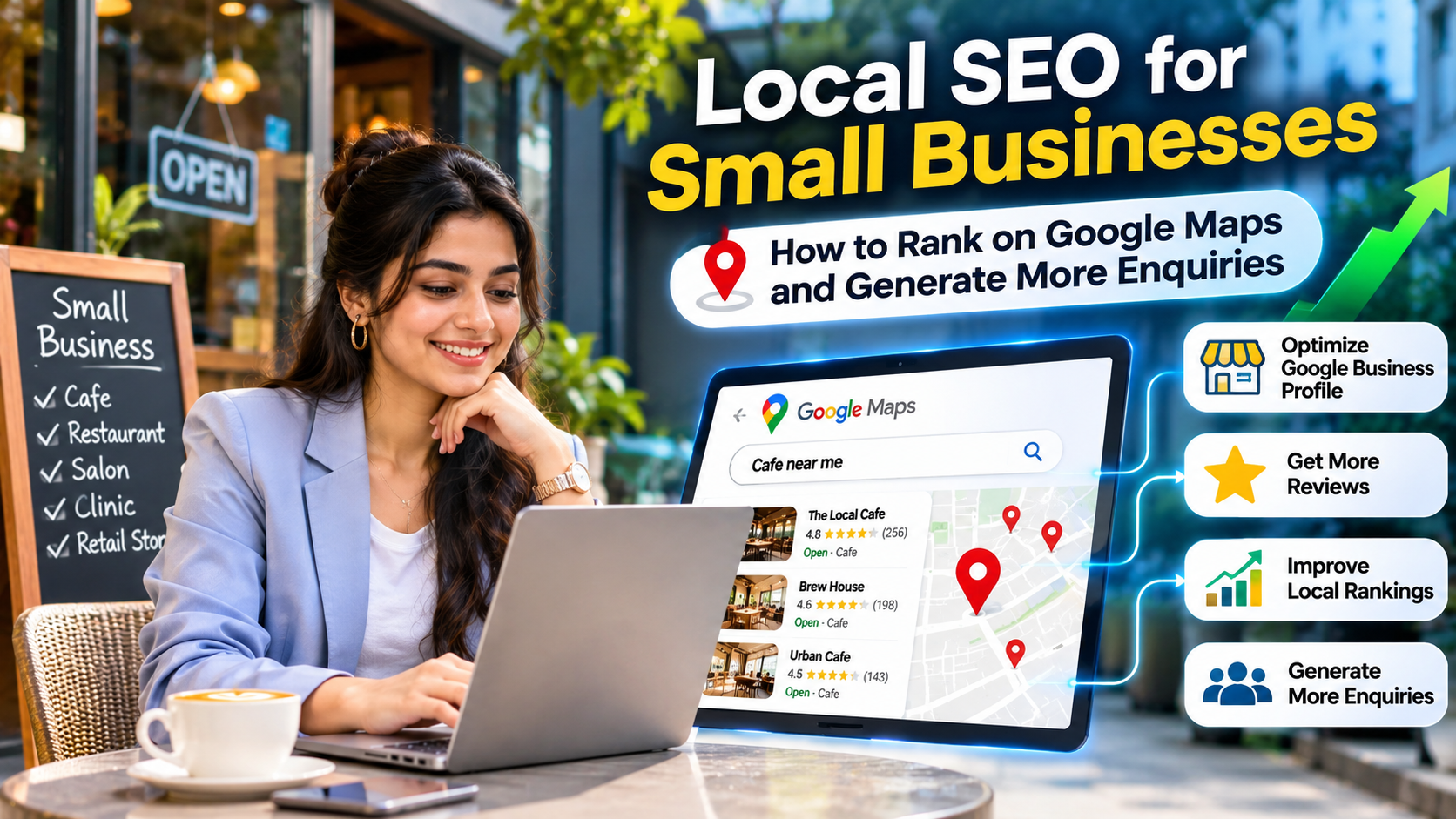
For small businesses, attracting customers from nearby locations is one of the most important parts of business growth. Whether you run a restaurant, salon, clinic, coaching institute, retail shop or professional service, potential customers often search online before visiting or contacting a business.
This is where Local Search Engine Optimization (Local SEO) becomes important.
Local SEO helps small businesses improve their visibility in location-based search results and connect with people searching for nearby products and services.
By optimizing your Google Business Profile, using location-based keywords, improving your website and managing customer reviews, you can strengthen your online presence and generate more enquiries.
In this blog, we will explain how small businesses can use Local SEO to improve Google Maps rankings and attract more local customers.
1. What Is Local SEO and Why Is It Important for Small Businesses?
Local SEO is the process of improving a business's online visibility for searches related to a specific geographical location.
Unlike general SEO, which focuses on broader search visibility, Local SEO focuses on attracting customers from relevant nearby areas.
For example, consider these searches:
-
Best salon in Rajouri Garden.
-
Dentist near me.
-
Restaurants in West Delhi.
-
Digital marketing institute in Delhi.
-
AC repair services near me.
These searches indicate that people are looking for businesses in specific locations.
Local SEO helps small businesses become more visible when potential customers search for relevant services.
Benefits of Local SEO
Local SEO can help small businesses:
-
Improve Google Maps visibility.
-
Attract nearby customers.
-
Increase phone calls.
-
Generate website visits.
-
Receive more customer enquiries.
-
Improve local brand awareness.
-
Build customer trust.
-
Increase store visits and appointment requests.
For example, a salon in Rajouri Garden can optimize its website and business profile for relevant local searches to help nearby customers discover its services.
2. Optimize Your Google Business Profile
One of the most important steps in local search optimization is creating and maintaining an accurate Google Business Profile.
It helps customers discover your business through Google Search and Google Maps.
A properly optimized profile provides important information about your business and makes it easier for potential customers to contact you.
Complete Your Business Information
Start by adding accurate business information.
Your profile should include:
-
Correct business name.
-
Complete business address.
-
Contact number.
-
Website URL.
-
Business category.
-
Opening hours.
-
Available services.
-
Business description.
For example, if you operate a dental clinic, select the most relevant primary business category and add accurate information about the dental services you provide.
Avoid using unnecessary keywords in your business name. Your business information should reflect your actual business identity.
Select the Right Business Categories
Business categories help Google understand what your business offers.
Choose the most relevant primary category and add additional categories only when they accurately describe your services.
For example:
-
A restaurant should select an appropriate restaurant category.
-
A beauty salon should select a relevant salon category.
-
A coaching centre should choose an appropriate educational category.
Choosing accurate categories helps your business appear in relevant local searches.
Add High-Quality Business Photographs
Photographs help potential customers understand your business before visiting.
Add genuine and clear photographs of:
-
Business exterior.
-
Interior environment.
-
Products.
-
Services.
-
Staff members.
-
Facilities.
For example, a restaurant can upload photographs of its dining area and actual menu items, while a salon can showcase its interior and available services.
Keep photographs updated whenever your business environment or facilities change.
Keep Business Information Updated
Incorrect business information can create a poor customer experience.
Regularly check your profile for:
-
Updated opening hours.
-
Correct phone numbers.
-
Accurate location.
-
Service information.
-
Holiday schedules.
-
Website links.
Consistency and accuracy are important for local visibility and customer communication.
3. Use Local Keywords to Improve Google Maps Visibility
Keywords help search engines understand the services your business offers and the locations you serve.
Using relevant location-based keywords throughout your website can improve its relevance for local searches.
Find Relevant Local Keywords
Start by identifying the services customers search for in your area.
For example, a small business in Delhi may target relevant searches such as:
-
Best bakery in Rajouri Garden.
-
Digital marketing institute in West Delhi.
-
Beauty salon in Rajouri Garden.
-
Physiotherapy clinic in Delhi.
-
Home cleaning services near me.
Choose keywords that accurately describe your services and business location.
Add Local Keywords to Website Pages
Include relevant keywords naturally in:
-
Page titles.
-
Meta descriptions.
-
H1 and H2 headings.
-
Service descriptions.
-
Website content.
-
Image alt text.
-
Blog articles.
For example, a website page for a bakery can use a descriptive heading such as:
Fresh Cakes and Bakery Products in Rajouri Garden
The content should also explain the products, location, business hours and ways to contact the bakery.
Avoid repeating the same keyword unnaturally throughout a page.
Create Location-Specific Landing Pages
If your business serves multiple locations, create useful pages for the areas you genuinely serve.
For example, a home cleaning business operating in different parts of Delhi can create individual pages explaining its services in those locations.
Each location page should include:
-
Relevant service information.
-
Accurate location details.
-
Contact information.
-
Areas served.
-
Customer questions.
-
Enquiry options.
Avoid creating multiple pages with identical content and only changing the location name.
4. Build Local Citations and Maintain Business Consistency
Local citations are online mentions of your business name, address and contact information.
They help customers find your business across different online platforms.
Maintain Consistent NAP Information
NAP stands for:
-
Name.
-
Address.
-
Phone Number.
Your business details should remain consistent across your website, Google Business Profile and relevant business directories.
For example, if your business address is listed differently on different platforms, customers may become confused.
Check your business information regularly and correct outdated details.
List Your Business in Relevant Directories
Small businesses can consider listing themselves in relevant local business directories and industry-specific directories.
Make sure each listing contains:
-
Correct business name.
-
Accurate address.
-
Working phone number.
-
Website URL.
-
Relevant business category.
Focus on genuine and relevant directories instead of creating large numbers of low-quality listings.
Build Genuine Local Relationships
Local business partnerships can also improve brand awareness.
For example, a photography studio can collaborate with local event planners, while a fitness centre can work with nearby wellness businesses.
These genuine relationships can create opportunities for relevant website mentions and referrals.
5. Collect and Manage Customer Reviews
Customer reviews are an important part of local business visibility and customer decision-making.
Before choosing a business, many people read reviews to understand the experiences of previous customers.
Positive, genuine feedback can help build trust.
Encourage Customers to Leave Reviews
After providing a product or service, politely invite customers to share their honest feedback.
You can request reviews through:
-
Follow-up messages.
-
Email communication.
-
QR codes at your business location.
-
Printed feedback cards.
-
Post-purchase communication.
Never pressure customers to leave positive reviews or offer incentives in exchange for favourable feedback.
Respond to Positive and Negative Reviews
Responding to reviews shows that your business values customer feedback.
For positive reviews, thank customers for sharing their experiences.
For negative reviews:
-
Read the complaint carefully.
-
Respond politely.
-
Acknowledge the customer's concern.
-
Avoid arguments.
-
Offer an appropriate way to resolve the issue.
For example, if a customer complains about delayed service, respond professionally and explain how the business can address the concern.
Monitor Customer Feedback
Review customer comments regularly to identify recurring problems.
For example, if several customers mention difficulty finding your business location, you may need to improve your directions and location information.
Customer feedback can help improve both your services and your online reputation.
6. Optimize Your Website for Local SEO
Your website plays an important role in supporting your local search presence.
A professional and optimized website helps visitors understand your services and contact your business.
Create Individual Service Pages
Instead of describing every service on one general page, create separate pages for important services.
For example, a digital marketing agency can create individual pages for:
-
SEO services.
-
Google Ads management.
-
Social media marketing.
-
Website development.
-
Content marketing.
Each page should explain the service, benefits, process and contact options.
Make Your Website Mobile-Friendly
Many local searches happen on mobile devices.
Your website should provide a smooth mobile browsing experience.
Important improvements include:
-
Responsive website design.
-
Readable text.
-
Simple navigation.
-
Fast-loading pages.
-
Clickable phone numbers.
-
Easy-to-use enquiry forms.
-
Clear location information.
A visitor should be able to contact your business without searching through multiple pages.
Add Clear Calls to Action
A call to action encourages website visitors to take the next step.
Useful examples include:
-
Call Now.
-
Get a Quote.
-
Book an Appointment.
-
Request a Consultation.
-
Visit Our Store.
-
Enquire Now.
Place relevant calls to action on important service pages.
For example, a clinic can add an appointment enquiry button to its service pages, while a repair business can include a request-a-quote option.
Add Local Business Information
Include your business address, contact number, opening hours and service locations on your website.
You can also add an embedded Google Map to help visitors understand your location.
Where appropriate, use structured data to help search engines understand your business information.
7. Use AI Tools to Improve Local SEO
Artificial Intelligence can help small businesses organize their local SEO activities and improve marketing efficiency.
AI tools can support keyword research, content creation, review response drafts and website optimization.
AI for Local Keyword Research
AI can help generate keyword ideas based on your business category and location.
For example, a restaurant can research search topics related to its menu, dining experience and neighbourhood.
A service provider can identify keywords related to the services and locations it covers.
Review keyword suggestions carefully and select only relevant search terms.
AI for SEO Content Creation
AI writing tools can help prepare:
-
Local SEO blog outlines.
-
Service page drafts.
-
Meta descriptions.
-
Website headings.
-
Frequently asked questions.
-
Location-specific content ideas.
For example, a coaching institute can use AI to prepare an article about choosing the right coaching centre in its city.
The final article should contain accurate, original and useful information.
AI for Customer Review Management
AI can assist with preparing professional responses to customer feedback.
For example, a business can use AI to draft a polite response to a customer who appreciated its service.
Always review responses before publishing them, especially when a review includes sensitive or personal information.
AI for Local SEO Reporting
AI-assisted analysis can help organize marketing information such as:
-
Website traffic.
-
Local keyword performance.
-
Google Business Profile interactions.
-
Customer enquiries.
-
Website conversion activity.
Use actual performance data to identify areas that require improvement.
8. How Local SEO Generates More Customer Enquiries
Improving search visibility is important, but small businesses also need to convert visitors into enquiries.
A well-planned local SEO strategy should make it easy for customers to contact your business.
Make Contact Information Easy to Find
Display your phone number, address and enquiry options clearly.
Customers should not have to search through multiple pages to find your contact information.
Add Enquiry and Booking Forms
Simple forms can help businesses collect relevant customer enquiries.
A basic form may request:
-
Customer name.
-
Contact number.
-
Service required.
-
Preferred date, where applicable.
-
Additional enquiry details.
Avoid collecting unnecessary personal information.
Provide Clear Service Information
Explain what your business offers, where it operates and how customers can use its services.
For example, a home repair business should clearly describe its repair services and service areas.
A restaurant should provide accurate menu and location information.
Clear information helps customers make decisions and contact the right business.
Track Enquiry Sources
Identify where your enquiries are coming from.
Monitor:
-
Calls from your business profile.
-
Website contact form submissions.
-
Website visits from local searches.
-
Direction requests.
-
Appointment enquiries.
This helps you understand which parts of your local marketing strategy are contributing to customer enquiries.
9. Measure and Improve Your Local SEO Performance
Local SEO requires consistent monitoring and improvement.
Small businesses should regularly evaluate whether their optimization activities are helping customers discover and contact them.
Important performance indicators include:
Google Business Profile Performance
-
Profile views.
-
Search visibility.
-
Website clicks.
-
Calls.
-
Direction requests.
Website Performance
-
Organic traffic.
-
Local keyword performance.
-
Service page visits.
-
Enquiry form submissions.
-
Mobile website performance.
Customer Engagement
-
Customer reviews.
-
Review responses.
-
Customer enquiries.
-
Appointment requests.
-
Phone calls.
For example, if your business profile receives views but very few calls or website visits, review your business description, photographs, services and contact information.
Local rankings can vary according to the searcher's location, search relevance and competition. No SEO strategy can guarantee a particular Google Maps position.
Conclusion
Local SEO is an important digital marketing strategy for small businesses that want to attract customers from nearby locations.
By optimizing your Google Business Profile, using relevant location-based keywords, maintaining consistent business information, collecting genuine customer reviews and improving your website, you can strengthen your local online presence.
AI tools can further support these activities through keyword research, content creation, review response drafts and marketing analysis.
At Upskill Now, learners can explore practical digital marketing skills, including Local SEO, keyword research, Google Business Profile optimization, content marketing and AI-powered marketing tools.
The AI Digital Marketing Master Program covers relevant areas such as SEO, Google Ads, performance marketing and AI tools to help learners understand modern digital marketing strategies.
If you want to develop practical knowledge of Local SEO and digital marketing, explore the courses available at Upskill Now and take the next step towards building your skills.
SEO Keywords
-
Local SEO for Small Businesses
-
Google Maps SEO
-
Google Business Profile Optimization
-
Local Search Optimization
-
Local Business Lead Generation
Frequently Asked Questions (FAQs)
1. How can small businesses rank higher on Google Maps?
Small businesses can improve their Google Maps visibility by maintaining an accurate Google Business Profile, selecting relevant business categories, adding genuine photographs, collecting customer reviews and keeping business information updated. Relevant website content and local SEO also support visibility.
2. How does Google Business Profile help generate more enquiries?
Google Business Profile displays important business information such as address, contact number, opening hours, photographs and website details. Customers can use this information to call, request directions or visit the business website.
3. How long does Local SEO take to show results?
Local SEO does not have a fixed timeline. Results depend on factors such as business location, competition, website quality, profile accuracy and the consistency of optimization activities. Regular improvements can help build local visibility over time.
4. Which keywords should small businesses use for Local SEO?
Small businesses should use relevant service-based and location-based keywords. For example, a salon can target searches related to its beauty services and neighbourhood. Keywords should accurately describe the business and the locations it serves.
5. Can AI tools help small businesses improve Local SEO?
Yes. AI tools can assist with local keyword research, SEO content planning, website content improvement, customer review response drafts and performance analysis. Business owners should review AI-generated information before publishing it.
Contact Upskill Now
-
Address: A-3, Third Floor, Rajouri Garden, New Delhi – 110027, India
-
Contact Number: +91 99998 48160
-
Alternate Number: +91 97114 48765